Gerhard THÜR
ist korrespondierendes Mitglied der Österreichischen Akademie der Wissenschaften
Uri YIFTACH
ist Associate Professor im Department of Classics der Universität Tel Aviv mit Schwerpunkt in der Erforschung der griechischen Papyri Ägyptens
Rachel ZELNICK-ABRAMOVITZ
ist Associate Professor im Department of Classics der Universität Tel Aviv
|
 |
ISBN 978-3-7001-8380-8 Print Edition
ISBN 978-3-7001-8468-3 Online Edition
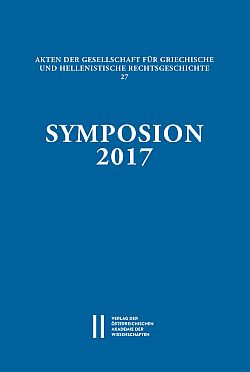
Das 21. Symposion der Internationalen Gesellschaft für griechische und hellenistische Rechtsgeschichte fand vom 20. bis 23. August 2017 in Tel Aviv statt. Es wurden 16 Vorträge gehalten, deren Diskussion jeweils ein Respondent eröffnete. Die Vorträge und Antworten zu folgenden Themenbereichen sind in diesem Band zusammengefasst: archaisches griechisches Recht, Recht des klassischen Athen, epigraphische und literarische Zeugnisse des Rechtslebens aus weiteren Poleis der hellenistischen und römischen Zeit sowie juristische Papyrusdokumente. Der Band ist dem Andenken Joseph Mélèze Modrzejewskis gewidmet, Mitbegründer des „Symposion“ und Mitorganisator seit 1971. Die Veranstaltung pflegt das Zusammenwirken der rechtswissenschaftlichen mit den altertumswissenschaftlichen Disziplinen auf internationaler Basis und lässt den Vortragenden freie Hand bei der Wahl von Themen aus ihren aktuellen Arbeitsgebieten.
…
The 21st Symposion of the International Society for Greek and Hellenistic Legal History took place in Tel Aviv on September 20–23, 2017. Sixteen papers were presented, and respondents opened the discussion after each paper. The papers and responses to the following issues are collected in this volume: archaic Greek law, law of classical Athens, epigraphic and literary evidence of legal practice from other poleis of Hellenistic and Roman times, as well as legal papyrus documents. The volume is dedicated to the memory of Joseph Mélèze Modrzejewski, co-founder of the “Symposion” and its co-organizer since 1971. The meeting fosters on an international level the cooperation of legal historians with those studying all aspects of Classical Antiquity allowing the participants a free choice of topics from their current areas of research.
|