 |
 |
(Social) Place and Space in
|
 Birgitta Eder is head of the Austrian Archaeological Institute, Athens Branch, at the Austrian Academy of Sciences Michaela Zavadil is research associate at the Institute of Oriental and European Archaeology at the Austrian Academy of Sciences |
|
Die mykenische Kultur Griechenlands (ca. 1700–Mitte des 11. Jahrhunderts v. Chr.) hat ein herausragendes materielles Erbe in Form von Gebäuden und Artefakten hinterlassen. Lange konzentrierte sich ihre Erforschung auf Paläste und Grabmonumente. In den letzten Jahren hat sich dies jedoch erheblich geändert, was ein besseres Verständnis der Entstehung der mykenischen Kultur im 17. bis 15. Jahrhundert v. Chr. ermöglicht. Die Beiträge in diesem Band liefern neue Informationen, entweder Erkenntnisse aus neueren Feldforschungen, oder solche, die auf der neuerlichen Analyse zentraler Fundgruppen basieren bzw. umfassende vergleichende Studien darstellen, die durch die Untersuchung von Siedlungen und Gräbern neue Perspektiven auf die Entstehung einer neuen Gesellschaftsordnung eröffnen. …
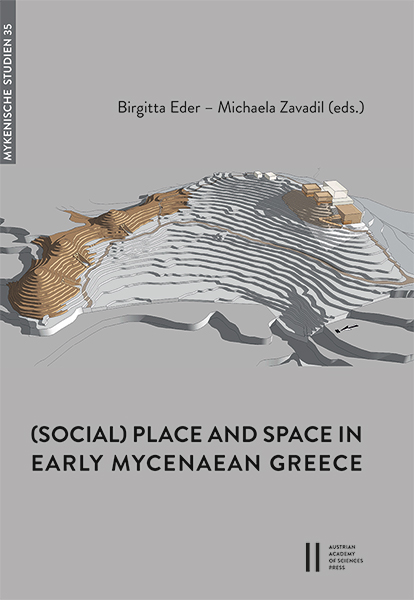
The Mycenaean culture of Greece (ca. 1700–mid-11th century BC) has left an outstanding material legacy in terms of buildings and artefacts. For a long time, its exploration has focused on palaces and funerary monuments. However, in recent years the state of research has changed significantly, opening up new perspectives for a broader understanding of the emergence of Mycenaean culture in the 17th to 15th centuries B.C. The contributions in this volume provide new information, either insights from recent fieldwork, the fresh analysis of key assemblages, or more comprehensive comparative studies that, by examining settlements and tombs alike, open up new perspectives on the emergence of a new social order.
|
 |
Verlag der Österreichischen Akademie der Wissenschaften Austrian Academy of Sciences Press
A-1011 Wien, Dr. Ignaz Seipel-Platz 2
Tel. +43-1-515 81/DW 3420, Fax +43-1-515 81/DW 3400 https://verlag.oeaw.ac.at, e-mail: verlag@oeaw.ac.at |
|
|
|||||||||||||||||||
|
DATUM, UNTERSCHRIFT / DATE, SIGNATURE
BANK AUSTRIA CREDITANSTALT, WIEN (IBAN AT04 1100 0006 2280 0100, BIC BKAUATWW), DEUTSCHE BANK MÜNCHEN (IBAN DE16 7007 0024 0238 8270 00, BIC DEUTDEDBMUC)
|
