Reinhard Jung
is Head of the research group Mediterranean Economies at the Austrian Archaeological Institute, Austrian Academy of Sciences
Eleftheria Kardamaki
is Research Assistant at the Austrian Archaeological Institute of the Austrian Academy of Sciences
|
 |
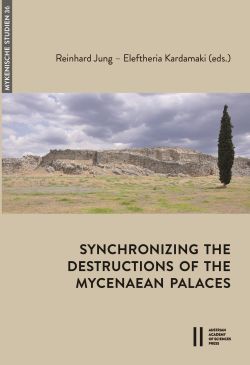
The Late Bronze Age Mycenaean palaces in southern and central Greece stood at the head of the earliest state system on the European continent. The authors, all leading scholars in Bronze Age research and often engaged in excavating the palace sites themselves, focus in their contributions on the most recent progress in pottery studies, in order to arrive at precise relative chronological dates of the destruction events. The investigated archaeological sites range from Crete in the south to the Peloponnese with the palaces of Pylos, Ayios Vasileios, Mycenae and Tiryns and further north to central Greece with the palace of Thebes, while contemporary sites on Cyprus and in Syria are taken into consideration as well. A precise chronology of those multilayered sites is a precondition for placing the administrative texts from the palace archives in a historical sequence as well as for writing the building history of the palaces themselves. Ultimately, this chronological sequence must also form the backbone of each theory seeking to explain the causes of the palace destructions and their final abandonment. The search for those historical causes is subject of this publication as well. The book contains primary data from the investigated sites – in many cases illustrating the relevant archaeological finds for the first time. It is the first comprehensive analysis of the topic and is based on the most recent archaeological excavation results.
Published with the support of the Austrian Science Fund (FWF)

…
Die spätbronzezeitlichen mykenischen Paläste in Süd- und Zentralgriechenland standen an der Spitze der ältesten staatlichen Strukturen auf dem europäischen Kontinent. Die Autor/inn/en dieses Bandes, sämtlich führende Expert/inn/en der Bronzezeitforschung und meist selbst die Ausgräber/innen der Paläste, legen den Schwerpunkt ihrer Beiträge auf die neuesten Fortschritte der Keramikforschung, um genaue relativchronologische Datierungen der verschiedenen Zerstörungsereignisse zu erzielen. Die behandelten archäologischen Fundorte reichen von Kreta im Süden über die Peloponnes mit den Palästen von Pylos, Ajios Wassilios, Mykene und Tiryns bis nach Zentralgriechenland mit dem Palast von Theben im Norden; darüber hinaus werden auch zeitgleiche Fundorte auf Zypern und in Syrien berücksichtigt. Die genaue zeitliche Abfolge dieser mehrschichtigen Ausgrabungsorte zu bestimmen, ist Voraussetzung dafür, die Verwaltungstexte aus den Palastarchiven in eine historische Reihenfolge zu bringen, und ebenso dafür, die Baugeschichte der Paläste selbst zu schreiben. Schließlich ist es diese chronologische Abfolge, die das Rückgrat jeder Theorie bilden muss, mit der die Ursachen für die Zerstörungen der Paläste und deren endgültige Aufgabe erklärt werden soll. Die Suche nach diesen historischen Ursachen ist ebenfalls Gegenstand der Publikation. Das Buch enthält Primärdaten von den untersuchten Grabungsplätzen, wobei es sich in vielen Fällen um die Erstpublikation des relevanten Fundmaterials handelt. Es ist die erste umfassende Behandlung des Themas und stützt sich auf die neuesten archäologischen Grabungsergebnisse.
|