 |
 |
Österreichische Zeitschrift für Kunst und Denkmalpflege
|
 |
|
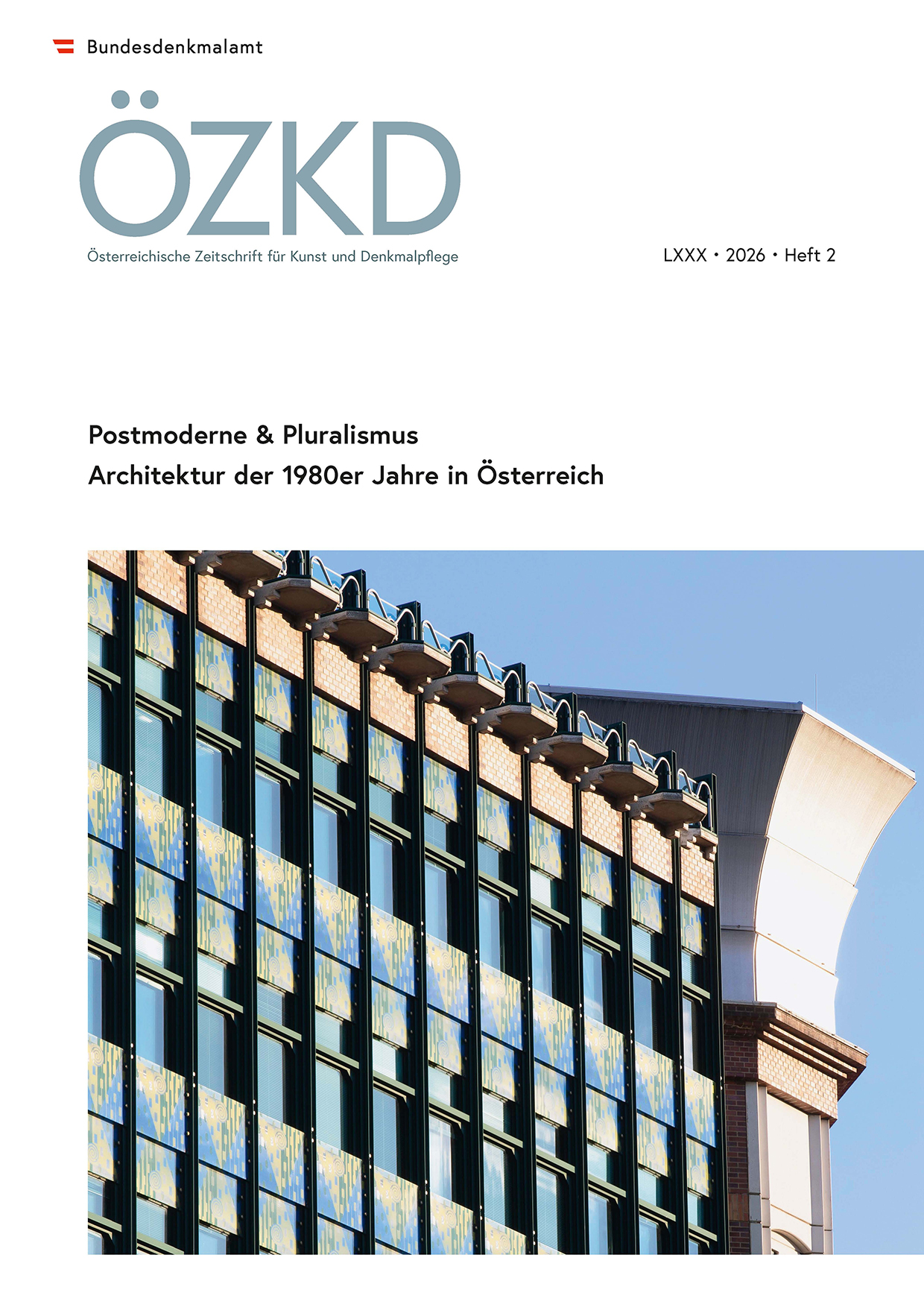
Der vorliegende Band widmet sich unter dem Titel „Postmoderne und Pluralismus“ dem architektonischen Erbe der 1980er-Jahre in der Denkmalpflege. Die Beiträge beleuchten die Theorie und kontroverse Rezeption der österreichischen Postmoderne – von Hans Holleins Bauten über das Wiener Oktoneum bis hin zu ökologischen und partizipativen Ansätzen. Ein besonderer Fokus liegt auf der Vielfalt dieser Epoche: Erforscht werden unter anderem die oft vergessenen Beiträge von Architektinnen, der Wandel im Sakralbau sowie die Herausforderungen beim Erhalt dieser noch jungen Denkmale, die als vielschichtige historische Dokumente unser heutiges Stadtbild mitprägen. |
 |
Verlag der Österreichischen Akademie der Wissenschaften Austrian Academy of Sciences Press
A-1011 Wien, Dr. Ignaz Seipel-Platz 2
Tel. +43-1-515 81/DW 3420, Fax +43-1-515 81/DW 3400 https://verlag.oeaw.ac.at, e-mail: verlag@oeaw.ac.at |
|
|
|||||||||||||||||||
|
DATUM, UNTERSCHRIFT / DATE, SIGNATURE
BANK AUSTRIA CREDITANSTALT, WIEN (IBAN AT04 1100 0006 2280 0100, BIC BKAUATWW), DEUTSCHE BANK MÜNCHEN (IBAN DE16 7007 0024 0238 8270 00, BIC DEUTDEDBMUC)
|
